News · October 14, 2026
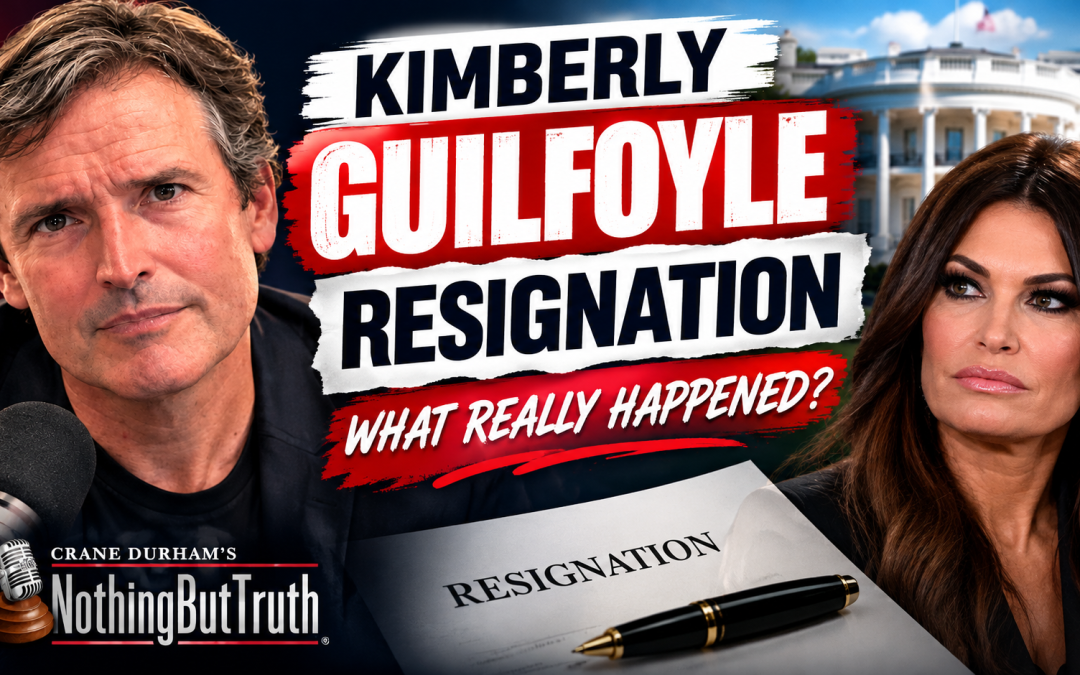
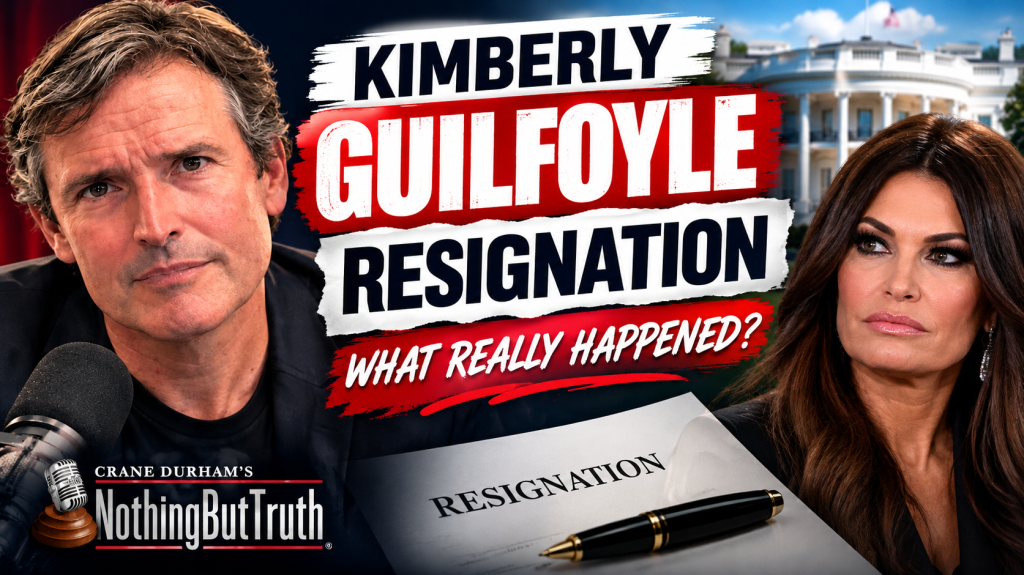
Kimberly Guilfoyle Resignation: What Really Happened?
Breakdown of today’s stories: why they matter, past the spin.
Prefer to watch? Crane covers these stories in this week's show.
Guilfoyle resignation
The White House asked its ambassador to Greece to resign over allegations of improper conduct; she denies them and is leaving. Spin from both sides treats this as either a “gotcha” scandal or a nothing-burger. The real issue is simple: public office is a trust, not a personal platform. When credible reports of misconduct arise, the person holding the office must answer for it. Soft-pedaling or over-hyping the claims both obscure the basic requirement that those who exercise authority live under the same standard of integrity as everyone else. Unresolved questions about character in high places erode the legitimacy of government itself.
“Nothing is covered up that will not be revealed, or hidden that will not be known.” (Luke 12:2)
Midterm campaigning, tight Senate races, and Musk's massive donations
Trump is stumping in Alaska for a Republican senator in a suddenly competitive race; other red-state contests look closer than expected, and one private donor has poured hundreds of millions into the Republican side. The spin frames this as either “Trump’s power” or “billionaire influence buying democracy.” The underlying reality is that political power is temporary and contestable. Large sums of money accelerate the contest but do not create the underlying discontent over cost of living, borders, and cultural direction. Voters remain the final earthly check; no amount of spending permanently locks in outcomes. Concentrated wealth seeking political leverage is an old problem, not a new one—power and money attract each other, and both must be restrained.
“Put not your trust in princes, in a son of man, in whom there is no salvation.” (Psalm 146:3)
Judge blocking the White House media ban
A federal judge extended an order preventing the administration from excluding certain outlets from White House coverage. One side calls this a victory for the free press; the other sees judicial overreach protecting hostile media. The core issue is whether the executive can selectively decide which journalists may observe and report on its actions. Government that can quietly freeze out critical coverage gains an advantage over the public’s ability to know what is being done in its name. At the same time, media organizations that function as partisan actors lose the moral claim to special access. Truth requires both: open access and honest reporting. Neither side currently holds that standard cleanly.
“Test everything; hold fast what is good.” (1 Thessalonians 5:21)
Russian diesel import deal and bipartisan pushback
Senators from both parties are demanding the administration reverse a waiver allowing Russian diesel into the U.S. market. The administration presents it as an “America First” move to lower fuel prices; critics call it a financial lifeline to Moscow. The hard question is whether short-term price relief justifies transferring money to a regime actively at war and under sanctions the U.S. itself helped impose. Energy security and lower costs for American households are legitimate goods. Funding an adversary’s war machine is not. Policy that prioritizes immediate consumer price over longer-term national interest reveals the constant temptation to trade principle for temporary political advantage.
“Take no part in the unfruitful works of darkness, but instead expose them.” (Ephesians 5:11)
Raid and investigation into Ilhan Omar's immigration history
Federal agents searched the congresswoman’s home as part of a Justice Department probe into her family’s immigration record. Democrats denounce it as election-timed abuse; supporters call it long-overdue accountability. The principle is equal application of the law. Immigration statutes exist for a reason: a nation that cannot define and enforce membership in its political community ceases to be a coherent people. If the facts show violations, the investigation is required regardless of the target’s political status. If the facts do not, the investigation should end. Timing near an election raises legitimate process concerns, but it does not cancel the duty to enforce the law against every person under it.
“You shall do no injustice in court. You shall not be partial to the poor or defer to the great, but in righteousness shall you judge your neighbor.” (Leviticus 19:15)
Alaska drilling fast-track and ICE operations
The administration is accelerating energy projects in Alaska by limiting certain environmental reviews and continuing enforcement actions against illegal presence and cartel activity. Opponents frame both as reckless and cruel; supporters frame them as necessary restoration of sovereignty and resource use. A nation that deliberately forgoes its own energy production while remaining dependent on unstable foreign suppliers weakens itself. Likewise, a government that fails to control its borders abandons one of its primary duties: protecting the distinct civil order of the people it serves. Both policies test whether the state will act as steward of the land and guardian of the community, or as manager of competing interest groups.
“Be fruitful and multiply and fill the earth and subdue it, and have dominion…” (Genesis 1:28)
SNAP fraud, Medicaid tightening, inflation data, and the Bank of America fine
Organized rings are stealing millions from food-aid programs through outdated systems; stricter Medicaid rules take effect in January; fresh inflation numbers are imminent; and a major bank faces a $1.2 billion penalty for failing to report suspicious transactions and sanctions breaches. These are not isolated bureaucratic stories. They reveal whether the systems meant to help the vulnerable and regulate finance actually function, or whether they have become vehicles for waste, theft, and selective enforcement. Fraud against the poor is still fraud. Inflation that erodes household purchasing power is a hidden tax. Banks that ignore clear legal duties while handling enormous sums demonstrate that rules often apply more strictly to the small than to the powerful. All of it returns to the same demand: honest dealing, measurable results, and equal accountability under the law.
“You shall not steal.” (Exodus 20:15) and “If anyone is not willing to work, let him not eat.” (2 Thessalonians 3:10)
Get the truth in your inbox before the spin gets to you.
Free, and one click to unsubscribe.